
onsdag den 24. december 2008

søndag den 21. december 2008
Pompeii
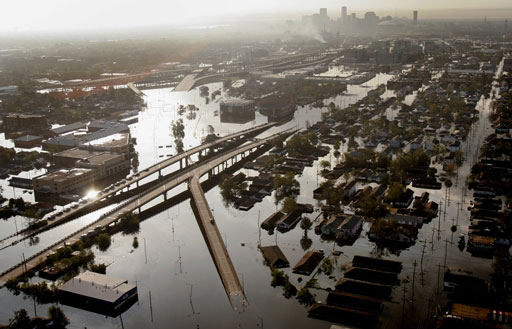
One of very many interesting points made by Jan Zalasiewicz in his new book The Earth After Us is that rising sea levels in an era of global climate change might actually – ironically – increase humanity's long-term chances of urban fossilization.
"If we and our children are very unlucky over the next few decades," he writes, "and the waters rise swiftly, then many of our cities may be as well preserved as Pompeii, as though in aspic."
After all, he adds, "if the sea rises quickly enough, and there is not time for the waves to do their work, landscapes may be drowned entire. Only a few meters beneath sea level, and what was the land now lies below the destructive surf zone. A hundred meters below sea level, and even the most violent storm waves can scarcely be felt. So, let the sea flood in, with its level jumping by meters over centuries or decades – or perhaps even years – and there simply will not be time for this wave energy to erode the landscape."
Then, once everything's underwater, the silting will begin. The planet's submerged coastal and river-delta cities will thus be "covered with sand and mud," entombed within the very landscapes upon which they once rested.
This would immediately put these regions beyond the reach of erosion – except perhaps for a little localized scouring by strong tidal currents – and into the kingdom of sedimentation. Our drowned cities and farms, highways and farms, would begin to be covered with sand, silt, and mud, and take the first steps towards becoming geology. The process of fossilization will begin.
And then, like some gigantic ribcage from a species no one will fully comprehend, bits of New Orleans and Amsterdam and Hanoi will be unearthed amidst the mudstones of a future geography.
So might rapid climate change mean not the complete erasure of humanity's material traces but, with fantastic irony, civilization's geologically long-term preservation?
fra BLDGBLOG

"If we and our children are very unlucky over the next few decades," he writes, "and the waters rise swiftly, then many of our cities may be as well preserved as Pompeii, as though in aspic."
After all, he adds, "if the sea rises quickly enough, and there is not time for the waves to do their work, landscapes may be drowned entire. Only a few meters beneath sea level, and what was the land now lies below the destructive surf zone. A hundred meters below sea level, and even the most violent storm waves can scarcely be felt. So, let the sea flood in, with its level jumping by meters over centuries or decades – or perhaps even years – and there simply will not be time for this wave energy to erode the landscape."
Then, once everything's underwater, the silting will begin. The planet's submerged coastal and river-delta cities will thus be "covered with sand and mud," entombed within the very landscapes upon which they once rested.
This would immediately put these regions beyond the reach of erosion – except perhaps for a little localized scouring by strong tidal currents – and into the kingdom of sedimentation. Our drowned cities and farms, highways and farms, would begin to be covered with sand, silt, and mud, and take the first steps towards becoming geology. The process of fossilization will begin.
And then, like some gigantic ribcage from a species no one will fully comprehend, bits of New Orleans and Amsterdam and Hanoi will be unearthed amidst the mudstones of a future geography.
So might rapid climate change mean not the complete erasure of humanity's material traces but, with fantastic irony, civilization's geologically long-term preservation?
fra BLDGBLOG
lørdag den 20. december 2008
onsdag den 17. december 2008

tirsdag den 16. december 2008


mandag den 15. december 2008
What Legacy Will Humans Leave in the Rocks?
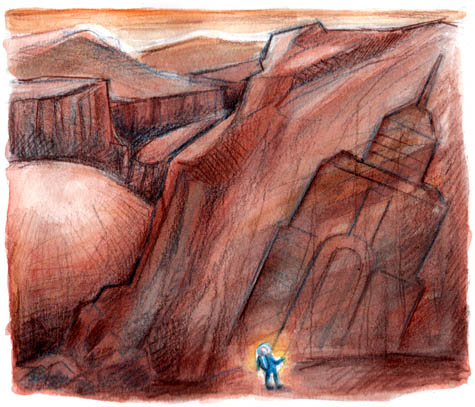
Zalasiewicz's book offers a fascinating and sustained look at what will happen to the material artifacts of human civilization 100 million years from now, when cities like Manhattan are mere trace fossils in flooded submarinescapes, Amsterdam is an indecipherably fragmentary presence in the lithified mudflats of a new, future continent, and cities like Los Angeles and Zurich have been eroded away entirely by a hundred million years of rockslides and weather.
To quote an early chapter from Zalasiewicz's book at great length:
The surface of the Earth is no place to preserve deep history. This is in spite of – and in large part because of – the many events that have taken place on it. The surface of the future Earth, one hundred million years now, will not have preserved evidence of contemporary human activity. One can be quite categorical about this. Whatever arrangement of oceans and continents, or whatever state of cool or warmth will exist then, the Earth's surface will have been wiped clean of human traces.
(...)
Thus, one hundred million years from now, nothing will be left of our contemporary human empire at the Earth's surface. Our planet is too active, its surface too energetic, too abrasive, too corrosive, to allow even (say) the Egyptian Pyramids to exist for even a hundredth of that time. Leave a building carved out of solid diamond – were it even to be as big as the Ritz – exposed to the elements for that long and it would be worn away quite inexorably.
(...)
So there will be no corroded cities amid the jungle that will, then, cover most of the land surface, no skyscraper remains akin to some future Angkor Wat for future archaeologists to pore over. Structures such as those might survive at the surface for thousands of years, but not for many millions.
How to Start Your Own Country
Anyone can start their own country.
So if you'd like to do your own thing in your own country, here's how to establish a micronation.

So if you'd like to do your own thing in your own country, here's how to establish a micronation.

lørdag den 13. december 2008

onsdag den 10. december 2008
SNAPPHANAR

Ordet snaphane kommer fra tysk, hvor det betegner en røver - sådan en der holder til i skoven og røver rige damer. Men under skånskekrigen 1675-1679 var snaphanerne et slags frikorps af skånske bønder, som kæmpede mod svenskerne. De skjulte sig i skovene og brugte bøsser og armbryste og var 1600-tals guerillaer.
Når de svenske soldater fangede snaphaner, dræbte de dem på stedet - eller hakkede en pløk gennem snaphanens rygrad, så døde han efter ca en uge....
Det er kl. 23.50 på DR1 i aften!
torsdag den 4. december 2008
tirsdag den 2. december 2008
La Llorona
Se formularon diversas teorías sobre la fantasmagórica desconocida, a la que el pueblo, por su perpetua aflicción, comenzó a llamar la Llorona. Se decía que era una mujer indígena, enamorada de un caballero español o criollo, con quien tuvo tres niños. Sin embargo, él no formalizó su relación: se limitaba a visitarla y evitaba casarse con ella. Tiempo después, el hombre se casó con una mujer española, pues tal enlace le resultaba más conveniente. Al enterarse, la Llorona enloqueció de dolor y ahogó a sus tres hijos en el río. Después, al ver lo que había hecho, se suicidó. Desde entonces, su fantasma pena y se la oye gritar "¡Ay, mis hijos!" (o bien, emitir un gemido mudo). Suele hallársela en el río, recorriendo el lugar donde murieron sus hijos y ella se quitó la vida.
La Llorona er en kendt myte opstået i Mexico der har bredt sig til en store dele af Latinamerika. I følge myten forelsker en indiansk kvinde sig i en spansk soldat, eller en creoler, som hun får tre børn med. Imidlertid er de ikke gift. Og noget tid senere gifter manden sig med en spansk kvinde. La Llorona rammes af stor sorg og smerte. I desperation smider hun sine tre børn i floden og begår senere selvmord. Nogle gange kan man høre hende råbe på sine børn søgende efter deres lig.
Jeg har også hørt noget med at man som mand skulle kunne møde hende i Mexico Citys gader, og hvis det sker tager hun al kraft ud af en, så man nærmest bliver levende død.
La Llorona er en kendt myte opstået i Mexico der har bredt sig til en store dele af Latinamerika. I følge myten forelsker en indiansk kvinde sig i en spansk soldat, eller en creoler, som hun får tre børn med. Imidlertid er de ikke gift. Og noget tid senere gifter manden sig med en spansk kvinde. La Llorona rammes af stor sorg og smerte. I desperation smider hun sine tre børn i floden og begår senere selvmord. Nogle gange kan man høre hende råbe på sine børn søgende efter deres lig.
Jeg har også hørt noget med at man som mand skulle kunne møde hende i Mexico Citys gader, og hvis det sker tager hun al kraft ud af en, så man nærmest bliver levende død.
mandag den 1. december 2008
Abonner på:
Opslag (Atom)